

 Tolulope Michael
What is CVV2 Credit Card and Debit Card Security?
When making online transactions, understanding what is CVV2 credit card is crucial for ensuring your financial security. The CVV2 (Card Verification Value 2) is a 3- or 4-digit code that is printed on credit and debit cards to verify that the cardholder is in possession of the card. Unlike the regular credit card number, the CVV2 is not stored by merchants during transactions, reducing the risk of fraud in case a merchant’s database is compromised.
As e-commerce continues to grow, protecting your card information has never been more important. The CVV2 adds an essential layer of security to online payments, making it one of the most important codes for card-not-present transactions. Whether you’re using a Visa debit card, MasterCard, or American Express, understanding how and where the CVV2 is located will help you ensure safe, secure transactions.

What is CVV2 on a Credit Card? CVV2 Number Example
CVV2 stands for Card Verification Value 2, and it is part of a card security system designed to validate online purchases. Unlike your credit card number, which can be intercepted or stolen through various means, the CVV2 code is printed directly on the card, making it harder for fraudsters to access.
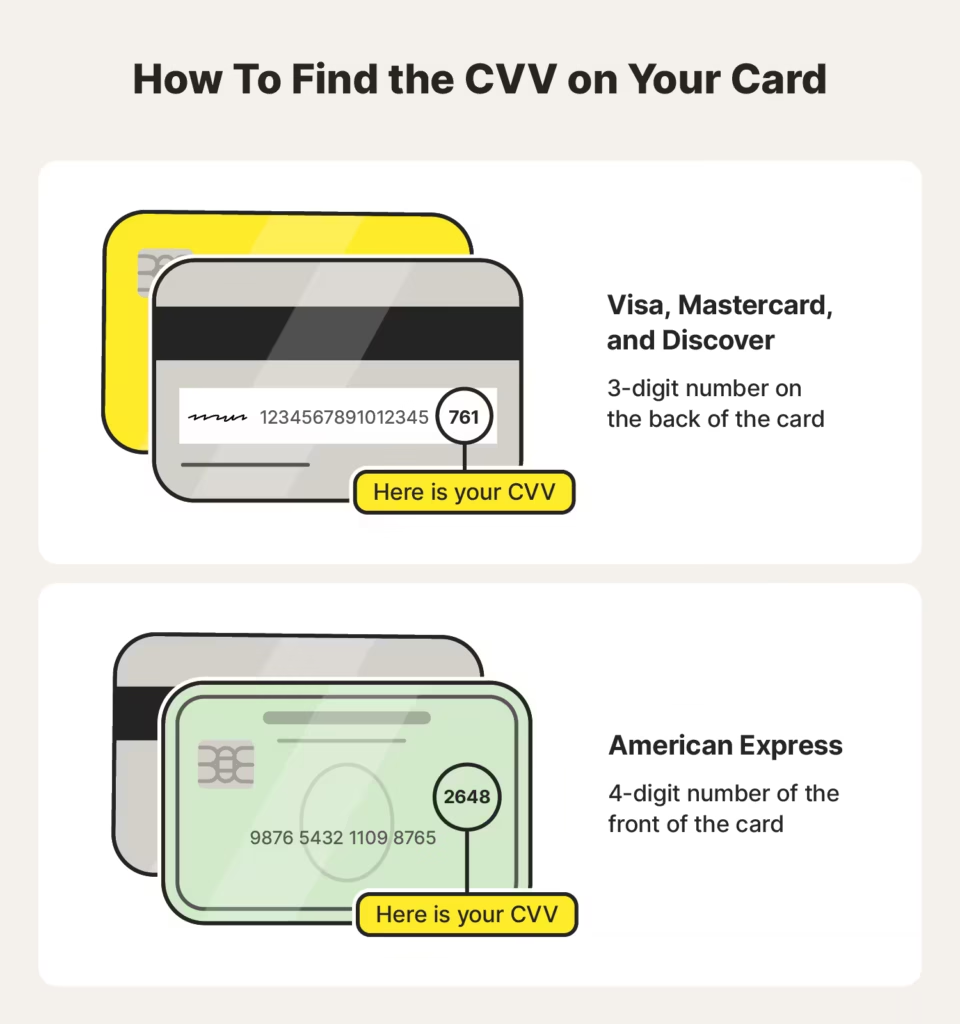
- Example of a CVV2 number: For most cards, the CVV2 is a 3-digit number (e.g., 123), located on the back of the card near the signature strip.
- For American Express (AMEX), it is a 4-digit number found on the front of the card.
This number is not stored by merchants during transactions, reducing the risk of it being exposed if the merchant’s database is compromised.
RELATED ARTICLE: Cloud Security Tips for Beginners & Pros in 2026
Where is the CVV2 Located on Different Cards?

Where is the CVV2 on a Visa Debit Card?
On Visa debit cards, the CVV2 is usually a 3-digit number located on the back of the card, after the card number in the signature area. This is common for most Visa and MasterCard cards.
Where is the CVV2 on a Visa Gift Card?
Similar to regular Visa debit cards, the CVV2 on a Visa gift card is found on the back of the card, next to the signature strip. However, some gift cards may display the CVV2 differently or label it as CVV or security code.
Where is the CVV2 on a Standard Chartered Credit Card?
For a Standard Chartered credit card, you’ll find the CVV2 in the same place as with Visa and MasterCard, the back of the card. It’s typically a 3-digit code located right after the card number and on the signature strip.
CVV2 vs CVV: What’s the Difference?
Both CVV (Card Verification Value) and CVV2 (Card Verification Value 2) are used to authenticate card transactions, but there is a difference between them.
- CVV: This is typically a 3-digit code used by MasterCard and Visa. It is often referred to as the card security code or simply CVV.
- CVV2: This is the updated version and is specifically used for Visa and MasterCard cards for online transactions.
While both codes serve the same security purpose, CVV2 is often considered an extra security measure for verifying that the card is physically in possession of the holder.
READ MORE: Everything You Need to Know About the Secure Shell Protocol (SSH) in 2026
What is CVV2 on American Express?
CVV2 on American Express (AMEX)
When it comes to American Express (AMEX), the CVV2 is slightly different. AMEX calls this number the CID (Card Identification Number) instead of CVV2. The CID is a 4-digit security number found on the front of your American Express card, usually located above the card number.
- The CID serves the same purpose as CVV2, helping to confirm that the cardholder is present during the transaction and preventing fraud.
- CVV2 is unique to Visa/MasterCard credit cards, while CID is specific to American Express.
This distinction is important, as the codes serve the same purpose but differ in their placement and length depending on the card issuer.
What Is CID on an American Express Card?

What is CID on Credit Card American Express?
The CID (Card Identification Number) on an American Express card is used as an authentication measure to prevent fraudulent transactions. Unlike the CVV2 on Visa or MasterCard, the CID is a 4-digit code located on the front of the card, usually above the card number.
- CID plays a critical role in verifying that the cardholder is physically in possession of the card during card-not-present transactions, such as online purchases.
By requiring this code, American Express provides an extra level of security for their cardholders during e-commerce transactions.
SEE ALSO: What Does NFS Mean? Understanding the Network File System in 2026
Understanding CVV2 on Gift and Debit Cards
What is CVV2 on One4all Card?
The CVV2 on a One4all card is also a 3-digit number located on the back of the card. It serves the same purpose as on Visa debit cards or gift cards, ensuring that the cardholder is physically in possession of the card during online transactions.
What Is CVV in Debit Card?
For debit cards, the CVV (or CVV2) is typically a 3-digit number located on the back of the card, which helps verify the authenticity of the card during online payments.
Why Is CVV2 Important for Online Transactions?
What is the CVV CVC Code on a Debit Card?
The CVV or CVC (Card Verification Code) on debit cards serves the same function as on credit cards. It’s an additional security feature that helps confirm that the person entering the card information is the cardholder.
When entering CVV2, merchants are assured that the card is in the customer’s possession, significantly reducing the risk of fraud.
MORE: What Is Event Stream Processor? How It Works in 2026
Common Mistakes with CVV2 and How to Avoid Them
What is a CVV in Debit Card?
A CVV (or CVV2) on debit cards is essential for secure online transactions. Common mistakes when entering your CVV2 include:
- Typing the wrong number: Always double-check the CVV2 on the back of your card.
- Forgetting to enter the CVV2: Some websites require it for verification, so don’t skip it.
- Sharing your CVV2 with untrusted parties: Never disclose your CVV2 number to unfamiliar sources.
Conclusion
CVV2 is an essential tool for ensuring secure online transactions. It serves as a verification step that proves you are the rightful cardholder. Whether you’re using a Visa debit card, MasterCard, or American Express, understanding CVV2 and its role in fraud prevention is key to protecting your financial information online.
Always be vigilant about where and to whom you share your CVV2 number to keep your transactions safe.
Ready to Master Online Payment Security with CVV2?
The CVV2 (Card Verification Value 2) is a critical component for securing your online transactions. Whether you’re shopping, transferring money, or making payments for services, CVV2 ensures that your card is in your possession, adding an extra layer of protection against fraud.
Understanding CVV2, how it works on different card types like Visa, MasterCard, and American Express, and how to securely use it in online payments can make a significant difference in protecting your financial data. Misunderstanding or neglecting to secure your CVV2 information could expose you to risks of online fraud.
Whether you’re a consumer looking to protect your purchases or a business owner securing your payment gateway, mastering CVV2 usage is key to keeping your financial transactions safe.
Book a Session with Tolulope Michael
If you’re looking to understand the best practices for using CVV2 and other card security codes in your transactions, book a one-on-one session with Tolulope Michael. Get expert guidance on how to protect yourself and your business from potential fraud risks.
FAQ
How do I find my CVV2 code?
You can find your CVV2 code by looking at the back of your credit or debit card. It is typically a 3-digit number printed after the card number and next to the signature strip for Visa, MasterCard, and Discover cards. For American Express cards, the CVV2 (or CID) is a 4-digit number located on the front of the card, usually to the right of the card number.
Is CVV2 the same as a PIN?
No, CVV2 and a PIN (Personal Identification Number) are not the same. While both are used for security purposes, the CVV2 is specifically for online and card-not-present transactions, serving as a verification code for cardholders during e-commerce purchases. A PIN, on the other hand, is used for ATM withdrawals or in-person transactions, like at point-of-sale terminals. The PIN is entered by the cardholder, while the CVV2 is typically requested during online payments.
What happens if I enter the wrong CVV2?
If you enter the wrong CVV2, the transaction will be declined. This happens because the CVV2 is used to verify that the card is in the cardholder’s possession during online transactions. If the code doesn’t match the one on file with your bank, the payment system cannot confirm your identity, which results in the failure of the transaction. To resolve this, double-check the CVV2 and ensure you enter the correct code as it appears on your card.
How do I use a CVV2? How do I use a CVV2?
To use a CVV2 when making an online purchase or phone payment, you will typically be prompted to enter the CVV2 along with your credit card number and expiration date. This is to confirm that you have the physical card on hand and prevent unauthorized use. Simply enter the 3-digit (Visa, MasterCard, Discover) or 4-digit (American Express) code as requested during the checkout process. The CVV2 helps verify your card’s authenticity and ensures the transaction is secure.
