

 Tolulope Michael
Risk Management Frameworks: Complete Guide for Cybersecurity Beginners
A risk management framework is a structured approach organizations use to identify, assess, and control risks before they cause damage. In cybersecurity, risk management frameworks help teams protect systems, reduce threats, and stay compliant with regulations.
Today, companies face more than just technical risks. They deal with AI risks, human errors, and complex cyber threats. That is why strong risk management frameworks now sit at the center of security risk management and business strategy.
In this guide, you will learn what risk management frameworks mean, how it works in cybersecurity, and how it connects directly to high-demand GRC roles.

What Is a Risk Management Framework in Cybersecurity?
A risk management framework is a step-by-step system that helps organizations find risks, understand their impact, and take action to reduce them.
In cybersecurity, teams use risk management frameworks to protect sensitive data, secure systems, and prevent attacks before they happen.
Many beginners confuse a few key terms, so let’s make them clear:
- A risk management framework gives the structure and process for managing risk
- A risk management system refers to the tools or software used to track and manage risks
- A risk management program is the full strategy an organization follows over time
Together, they form the foundation of security risk management.
From a cybersecurity career standpoint, this is where GRC comes in. Governance, Risk, and Compliance roles focus on applying these frameworks to real-world systems. Instead of writing code, professionals in this field analyze risks, recommend controls, and help organizations stay secure and compliant.
If you understand how a risk management framework works, you already have one of the most important skills needed to break into cybersecurity through the GRC path.
RELATED ARTICLE: Difference Between Risk Assessment and Risk Management
Why Risk Management Frameworks Matter in Cybersecurity
Cybersecurity is no longer just about firewalls and antivirus tools. Every decision a company makes carries risk, and without structure, those risks quickly turn into breaches, fines, or system failures. That is why risk management frameworks play a critical role in modern organizations.
They help teams move from reacting to threats to preventing them early. Instead of guessing what could go wrong, a structured risk management framework shows what to watch, how serious it is, and what action to take.
Here is what that looks like in real situations:
- A company identifies weak access controls before hackers exploit them
- A bank assesses the impact of a potential data breach before launching a new system
- A startup runs an AI governance assessment to manage risks tied to automated decisions
Modern risks go beyond technology. Many incidents now come from people, not systems. This is where human risk management becomes important. Employees clicking phishing links, misconfiguring systems, or mishandling data can create serious vulnerabilities.
At the business level, organizations use a business risk management framework to align security decisions with company goals. This ensures that risk controls do not slow growth but support it.
In simple terms, risk management frameworks help organizations:
- Protect sensitive data and systems
- Stay compliant with regulations
- Make smarter, faster decisions
- Build resilience against cyber and AI-related threats
For anyone entering cybersecurity, understanding this is key. Companies do not just hire people to fix problems. They hire people who can see risks early and manage them before they escalate.
Key Components of a Risk Management Framework
Every effective risk management framework follows a clear structure. These components guide how organizations handle risk from start to finish. If you understand these, you understand how real-world security risk management works.
Risk Identification
Teams start by identifying what could go wrong.
They look at systems, processes, and people to find possible threats. These risks can include cyberattacks, data leaks, system failures, or even human errors.
In cybersecurity, this step often reveals vulnerabilities before attackers find them.
Risk Assessment
Once teams identify risks, they assess how serious each one is.
They ask two key questions:
- How likely is this risk to happen?
- What impact will it have if it happens?
This helps organizations focus on the risks that matter most instead of wasting time on low-impact issues.
Risk Mitigation (Controls)
After assessment, teams decide what to do about each risk.
They can:
- Reduce the risk with security controls
- Transfer it (for example, through insurance)
- Accept it if the impact is low
In cybersecurity, this includes actions like implementing access controls, encryption, or monitoring systems.
Risk Monitoring and Reporting
Risk does not stop after one action. Teams must track it continuously.
They monitor systems, review reports, and adjust controls when needed. This ensures the risk management system remains effective over time.
Risk Governance
This defines who is responsible for managing risk.
Organizations assign roles, set policies, and define risk limits. Strong governance ensures everyone follows the same risk management program and makes consistent decisions.
When these components work together, they create a complete risk management framework that helps organizations stay secure, compliant, and prepared for both current and emerging threats.
READ MORE: Business Process Optimization: How to Cut Costs and Scale Faster in 2026
Types of Risk Management Frameworks Used in Cybersecurity
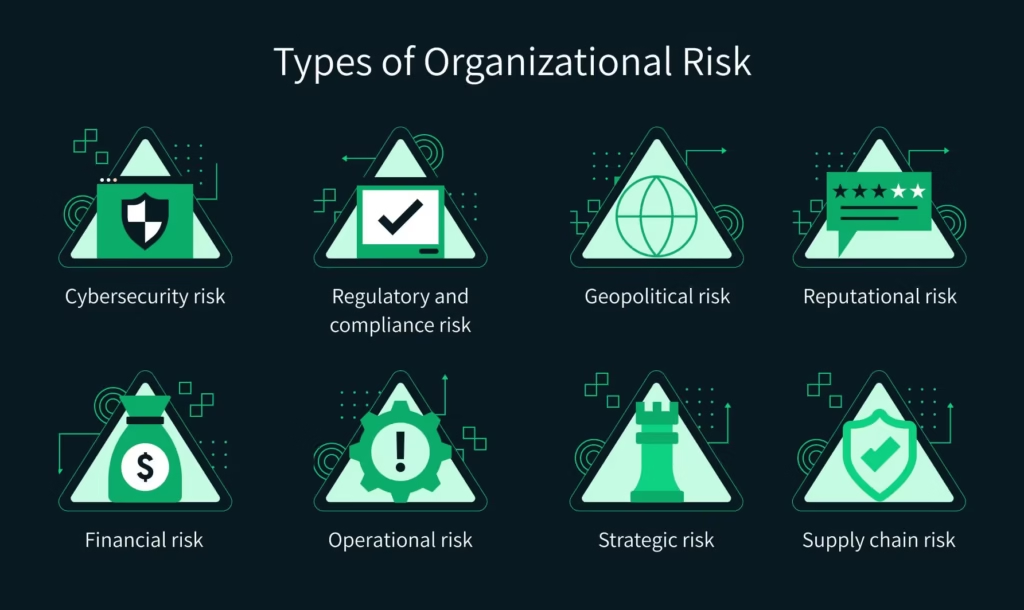
Not all risk management frameworks serve the same purpose. Some focus on the entire business, while others target cybersecurity or emerging risks like AI. Understanding these types helps you choose the right approach for different situations.
Enterprise-Level Frameworks
These frameworks manage risk across the entire organization.
The most popular example is the COSO enterprise risk management framework. It helps companies align risk with strategy, performance, and decision-making. Organizations use it to manage financial, operational, and strategic risks at scale.
This type fits companies that want a broad enterprise risk management framework covering all departments.
International Standards
These frameworks provide global guidelines that work across industries.
The risk management framework ISO 31000 stands out here. It focuses on principles, structure, and continuous improvement. Companies use it to build consistent risk processes, regardless of size or location.
ISO 31000 works well when organizations want a flexible but structured risk management system.
Cybersecurity-Specific Frameworks
These frameworks focus directly on protecting systems and data.
The NIST Risk Management Framework leads in this space. It provides a structured process to manage risks in IT systems and is widely used in government and private organizations.
This is a core part of security risk management, especially for companies handling sensitive data.
AI Risk Management Frameworks (2026 Focus)
AI introduces new types of risk that traditional frameworks do not fully cover.
The NIST AI Risk Management Framework helps organizations manage risks tied to artificial intelligence. It focuses on trust, transparency, and accountability.
Recent updates, including the nist ai rmf update november 2025 and nist ai rmf update october 2025, highlight the growing need for structured AI governance assessment in modern organizations.
The nist ai rmf playbook also provides practical guidance for applying these principles in real-world systems.
Understanding these types of risk management frameworks helps you see how organizations combine different approaches. Most companies do not rely on just one. They use a mix of frameworks to manage business, cybersecurity, and emerging risks effectively.
SEE ALSO: CAPM Certification: Cost, Requirements, Salary & How to Start in 2026
Top Risk Management Frameworks Explained (With Examples)

Organizations do not pick risk management frameworks randomly. Each framework solves a specific problem. If you understand when to use each one, you think like a real GRC professional.
Here are some of the top risk management frameworks used today, with clear examples.
NIST Risk Management Framework (RMF)
This framework focuses on securing information systems.
Organizations use it to manage risks in IT environments, especially where data protection and compliance matter.
Example:
A government agency uses NIST RMF to secure its databases and ensure only authorized users can access sensitive records.
ISO 31000 Risk Management Framework
This is a global standard that guides how organizations manage risk at every level.
It does not focus only on cybersecurity. It covers the entire business risk management framework, including strategy and operations.
Example:
A multinational company uses ISO 31000 to manage financial risks, operational risks, and market uncertainties across different countries.
COSO Enterprise Risk Management Framework
The COSO enterprise risk management framework connects risk with business performance.
It helps leaders make decisions while considering potential risks and opportunities.
Example:
A company planning expansion into a new market uses COSO to evaluate political, financial, and operational risks before investing.
FAIR (Factor Analysis of Information Risk)
FAIR focuses on measuring risk in financial terms.
It helps organizations understand how much a risk could cost, making it easier to prioritize actions.
Example:
A company uses FAIR to estimate the financial impact of a possible data breach and decide how much to invest in security controls.
These risk management framework examples show that no single framework fits all situations.
- NIST RMF works best for cybersecurity systems
- ISO 31000 fits broad organizational risk
- COSO aligns risk with strategy
- FAIR helps quantify risk in financial terms
Strong organizations combine multiple risk management frameworks to build a complete and effective risk management system.
NIST Risk Management Framework (Step-by-Step Guide)
The NIST Risk Management Framework is one of the most widely used risk management frameworks in cybersecurity. It gives a clear process that organizations follow to manage risks in information systems.
If you understand these steps, you understand how real-world security risk management works in practice.
1. Prepare
Teams define the system, identify stakeholders, and set the context.
They gather information about the environment, business goals, and potential threats. This step ensures the organization understands what it is protecting and why.
2. Categorize
Teams classify the system based on the sensitivity of the data it handles.
They determine how serious the impact would be if something goes wrong. This helps set the level of security needed.
3. Select
Teams choose the right security controls.
These controls include policies, tools, and procedures designed to reduce risk. The goal is to match controls with the level of risk identified earlier.
4. Implement
Teams put the selected controls into action.
They configure systems, apply security measures, and ensure everything works as planned.
5. Assess
Teams test the controls.
They check if the controls work correctly and actually reduce risk. This step helps identify gaps before attackers do.
6. Authorize
Leadership reviews the system and decides if it is safe to operate.
If the risk is acceptable, they approve it. If not, teams must fix the issues before moving forward.
7. Monitor
Teams continuously track the system.
They watch for new threats, update controls, and ensure the risk management system stays effective over time.
This step-by-step process makes the NIST RMF a powerful operational risk management framework. It does not just identify risks. It creates a continuous cycle that helps organizations stay secure, compliant, and ready for new threats.
MORE: What Is a Hash Function? A Simple Cybersecurity Guide for Beginners
How Risk Management Frameworks Apply to GRC Careers

This is where risk management frameworks become more than theory. They become your entry point into cybersecurity.
Companies do not just need engineers. They need professionals who understand risk, compliance, and decision-making. That is exactly what GRC roles focus on.
Why Companies Hire for RMF Skills
Organizations deal with constant pressure from:
- Regulations and audits
- Data protection requirements
- Cyber and AI risks
They need people who can apply a risk management framework to:
- identify risks early
- recommend the right controls
- ensure compliance
That is why security risk management skills are in high demand across industries.
How RMF Connects to GRC Roles
When you work in GRC, you use risk management frameworks daily.
For example:
- A GRC analyst uses frameworks to assess risks and document controls
- A risk analyst evaluates threats and recommends mitigation strategies
- A compliance analyst ensures the company follows standards like ISO 31000 or NIST
These roles rely on both enterprise risk management framework principles and cybersecurity frameworks to make decisions.
Where This Shows Up in Real Work
In real organizations, you might:
- Review systems using an operational risk management framework
- Support audits using a structured risk management program
- Help leadership understand risks before launching new products
This work does not require heavy coding. It requires clear thinking, structured analysis, and the ability to apply frameworks to real problems.
If you want to break into cybersecurity without a technical background, this path makes sense.
Learning how a risk management framework works gives you:
- a practical skill companies value
- a clear entry point into GRC
- the ability to contribute to real security decisions
This is why many professionals move into cybersecurity through risk and compliance roles. It is structured, in demand, and directly tied to how organizations operate.
ALSO: Mobile Network Virtual Operator in 2026: Meaning, Types, Examples
How to Get Started with Risk Management Frameworks

You do not need years of experience to start learning risk management frameworks. You just need a clear path and consistent practice.
Start with One Framework
Do not try to learn everything at once.
Begin with one widely used risk management framework like:
- NIST RMF for cybersecurity
- ISO 31000 for broader risk management
Focus on understanding how it works step by step. This builds a strong foundation in security risk management.
Use a Risk Management Framework Template
Practice makes everything clearer.
Use a simple risk management framework template to:
- list risks
- assess impact
- document controls
This helps you move from theory to real application. It also prepares you for tasks you will handle in a real risk management system.
Understand Sector Risk Mitigation Factors
Different industries face different risks.
For example:
- Banks focus on financial and data risks
- Healthcare focuses on patient data and compliance
- Tech companies focus on cloud and AI risks
Learning these sector risk mitigation factors helps you think like a professional and apply frameworks correctly.
Learn Through Real Scenarios
Do not just read. Apply.
Try simple exercises like:
- assessing risks for a small business
- reviewing a system for vulnerabilities
- mapping controls to risks
This builds confidence and prepares you for real-world risk management programs.
Build Consistency
You do not need to rush.
Spend time daily learning, practicing, and reviewing frameworks. Over time, you will understand how organizations use risk management frameworks to make decisions and stay secure.
Risk Management Framework Certification (What You Need)
You do not need a certification to understand risk management frameworks, but the right one can help you prove your skills and stand out.
Most companies use certifications to filter candidates, especially for GRC and security risk management roles.
Top Certifications to Consider
Here are some of the most relevant options:
- CRISC (Certified in Risk and Information Systems Control)
Focuses on identifying and managing IT risk in real organizations
- CISA (Certified Information Systems Auditor)
Covers auditing, controls, and compliance within a risk management system
- ISO 31000 Certifications
Helps you understand and apply the risk management framework ISO 31000
- GRC-focused training programs
These teach how to apply frameworks like NIST RMF in real scenarios
What Employers Actually Look For
Companies care less about the certificate alone and more about your ability to:
- apply a risk management framework to real problems
- understand controls and compliance requirements
- communicate risk clearly to stakeholders
That is why combining certification with hands-on practice gives you an advantage.
When to Get Certified
If you are just starting:
- learn the basics first
- practice using a risk management framework template
- understand how frameworks work in real situations
Then move into certification once you feel confident.
The Smart Approach
Certifications should support your knowledge, not replace it.
Focus on learning how risk management frameworks work in real environments. Once you can apply them, certifications become easier and more valuable for your career.
READ: Messaging Security Agent: Protecting Your Business Communications in 2026
Common Mistakes Beginners Make
Most people struggle with risk management frameworks not because the concepts are hard, but because they approach them the wrong way. Avoiding these mistakes will save you time and help you grow faster in security risk management.
Trying to Learn Everything at Once
Many beginners jump into multiple risk management frameworks at the same time.
They study NIST, ISO 31000, COSO, and others without mastering one first. This creates confusion and slows progress.
Start with one framework, understand it well, then expand.
Focusing Only on Theory
Reading about a risk management framework is not enough.
If you do not practice, you will struggle to apply it in real situations. Employers expect you to think through risks, not just define them.
Use a simple risk management framework template and work through real scenarios.
Ignoring Real-World Context
Risk is not the same everywhere.
A framework applied in banking will differ from one used in healthcare or tech. Ignoring sector risk mitigation factors leads to poor decisions.
Always consider the environment where the framework operates.
Overcomplicating the Process
Some beginners try to make frameworks more complex than they are.
They use too many tools, too many steps, or unnecessary jargon. A good risk management system should stay clear and practical.
Keep it simple. Focus on identifying risks, assessing impact, and applying the right controls.
Not Connecting RMF to Business Goals
A risk management framework does not exist on its own.
It supports business decisions. If you ignore the business side, your analysis will not add value.
Strong professionals connect risk to outcomes like revenue, growth, and compliance.
Avoiding these mistakes will help you understand how risk management frameworks work in real organizations and position you as someone who can apply them, not just explain them.
Conclusion
Risk management frameworks are not just theory. They shape how organizations stay secure, make decisions, and grow without exposing themselves to unnecessary risk.
In cybersecurity, a strong risk management framework helps teams identify threats early, apply the right controls, and maintain continuous oversight. It connects directly to security risk management, compliance, and real business outcomes.
For beginners, this creates a clear opportunity.
If you understand how risk management frameworks work, you can step into roles where companies need structured thinking, not just technical skills. That is why GRC continues to grow as one of the most accessible paths into cybersecurity.
Start simple. Learn one framework. Practice with real scenarios. Build consistency.
Over time, you will move from understanding risk to helping organizations control it.
Start Your Cybersecurity Career the Smart Way
Ready to turn your knowledge of risk management frameworks into a high-paying GRC role? Book a one-on-one session with Tolulope Michael and get a clear, practical roadmap to land your first role, without a technical background.
Make your next move count. Book your session now.
FAQs
What are the different risk management frameworks?
Different risk management frameworks serve different purposes. The most commonly used include:
– NIST Risk Management Framework (RMF) for cybersecurity systems
– ISO 31000 for general business risk management
– COSO Enterprise Risk Management for aligning risk with strategy
– FAIR for measuring risk in financial terms
Organizations often combine multiple frameworks to build a complete risk management system.
Is ISO 27001 a risk management framework?
No, ISO 27001 is not a full risk management framework.
It is an information security standard that focuses on protecting data through controls and processes. However, it includes a strong risk assessment and treatment component, which supports security risk management.
Many organizations use ISO 27001 alongside frameworks like NIST RMF or ISO 31000.
What are the 5 C’s of risk management?
The 5 C’s of risk management provide a simple way to evaluate risk, especially in financial and business contexts:
– Character – trustworthiness of individuals or entities
– Capacity – ability to handle risk or obligations
– Capital – financial strength or resources
– Collateral – assets that back risk exposure
– Conditions – external factors that affect risk
These are often used in lending and credit risk assessments.
What are the 4 types of risk in risk management?
Most organizations group risks into four main categories:
– Strategic risk – risks tied to business decisions and goals
– Operational risk – risks from internal processes or systems
– Financial risk – risks related to money, investments, or cash flow
– Compliance risk – risks from failing to follow laws or regulations
Understanding these categories helps teams apply the right risk management framework to each situation.