

 Tolulope Michael
Threat and Vulnerability Management: 2026 Guide for Cybersecurity Professionals
Threat and vulnerability management empowers cybersecurity professionals to identify, evaluate, and remediate security weaknesses before attackers exploit them. By integrating proactive vulnerability scanning with real-time threat intelligence, organizations reduce their attack surface, strengthen their cloud and on-premise environments, and safeguard critical data.
For anyone pursuing threat and vulnerability management jobs, mastering these skills is essential. Hands-on experience with vulnerability assessment services, network vulnerability assessment, and cloud vulnerability management equips you to make faster, informed decisions during incidents.
In this article, we break down the TVM lifecycle, explore practical threat and vulnerability assessment examples, outline essential tools and services, and provide actionable guidance for aspiring cybersecurity professionals. By the end, you’ll understand how to apply TVM to protect modern IT environments effectively.
What is Threat and Vulnerability Management?
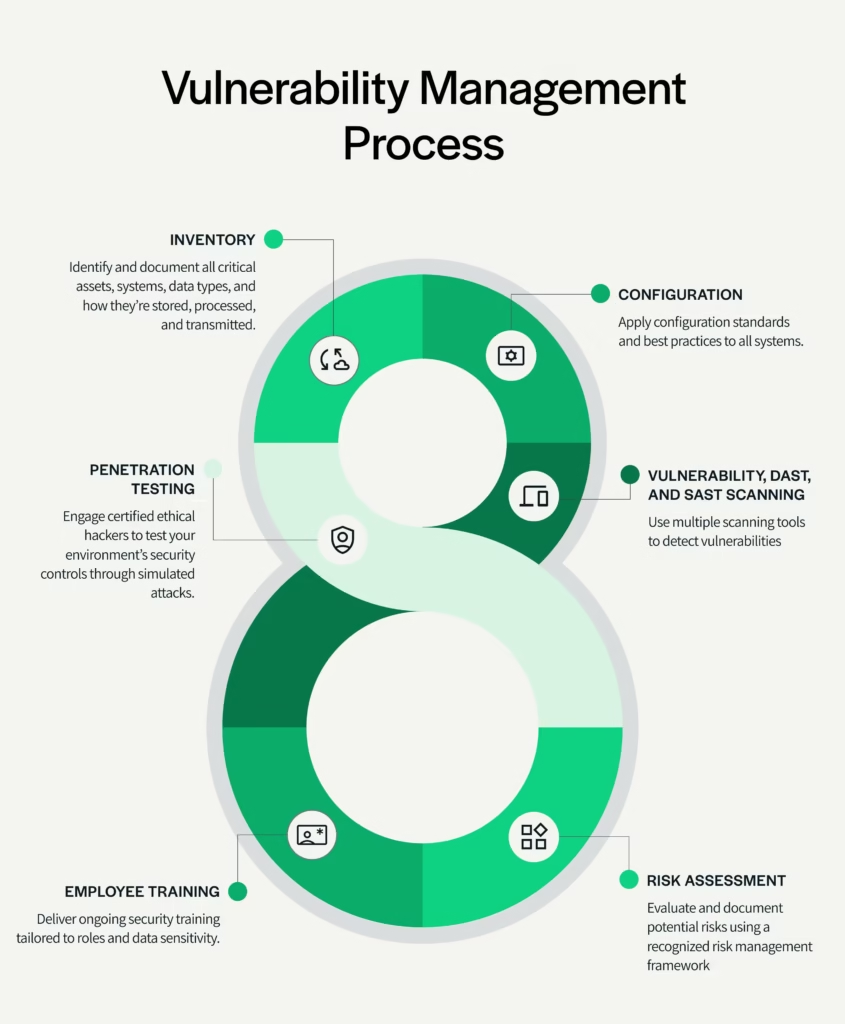
Threat and vulnerability management (TVM) is the practice of continuously identifying, assessing, and remediating security weaknesses across an organization’s IT environment. It combines proactive vulnerability scanning with real-time cyber threat management to reduce risk, prevent breaches, and protect business-critical systems.
A threat represents an active danger, like malware, phishing, or insider attacks, that can exploit vulnerabilities to compromise systems. A vulnerability is a weakness in software, configuration, or network design that attackers can target. Understanding threat vs vulnerability helps professionals focus efforts where risk is highest.
TVM ensures that no weakness goes unnoticed. Teams use internal and external vulnerability scanners, perform network vulnerability assessments, and apply vulnerability mitigation strategies to harden assets. In cloud environments, cloud vulnerability scanning and cloud vulnerability management tools provide visibility into exposed endpoints and misconfigurations.
By mastering TVM, cybersecurity professionals gain the skills needed for threat and vulnerability management jobs and can implement programs that actively protect data, streamline application vulnerability management, and maintain compliance across complex IT environments.
RELATED ARTICLE: Vulnerability Assessment in 2026: A Comprehensive Guide
Why Every Cybersecurity Professional Should Understand TVM
Mastering threat and vulnerability management gives cybersecurity professionals the ability to prevent attacks, protect assets, and respond quickly to emerging threats. Organizations face constantly evolving risks, from cloud misconfigurations to software exploits, and professionals who understand TVM can prioritize remediation based on risk, not just volume of vulnerabilities.
Hands-on experience with vulnerability management tools, vulnerability assessment services, and automated vulnerability management strengthens problem-solving skills that employers seek for threat and vulnerability management jobs. By learning to conduct network vulnerability assessments, perform cloud vulnerability scanning, and implement application vulnerability management, professionals gain real-world expertise that reduces the attack surface efficiently.
TVM knowledge also enhances decision-making in risk threat vulnerability scenarios. Professionals learn to correlate vulnerability data with active threats, focus on high-impact issues first, and enforce vulnerability mitigation strategies across cloud and on-premise environments.
Understanding TVM doesn’t just protect organizations; it positions cybersecurity practitioners to lead proactive security programs, demonstrate measurable impact, and accelerate career growth in modern IT environments.
Core Components of a TVM Program

A mature threat and vulnerability management program depends on several interconnected components. Each stage actively strengthens security and provides actionable insight for cybersecurity professionals.
Asset Discovery & Inventory
Start by identifying all digital assets, servers, endpoints, cloud resources, IoT devices, and applications. Use internal vulnerability scanners and automated discovery tools to maintain a live inventory. Knowing what to protect is the foundation for effective vulnerability management services and risk-based prioritization.
Vulnerability Assessment & Prioritization
Scan systems using external vulnerability scanners, network vulnerability assessments, and cloud vulnerability scanning. Analyze results with risk scoring frameworks that combine severity, exploitability, and asset criticality. Combined threat and vulnerability assessments provide a more complete picture, allowing teams to focus on vulnerabilities that attackers are most likely to exploit.
Remediation & Mitigation
Apply vulnerability mitigation through patching, configuration updates, and application vulnerability management. Use automated vulnerability management where possible to accelerate fixes. When immediate remediation isn’t feasible, deploy compensating controls to reduce exposure while maintaining operational continuity.
Monitoring & Continuous Improvement
Perform ongoing verification using managed vulnerability scanning and real-time threat intelligence. Continuously monitor your IT environment, update risk scoring models, and refine processes. Regularly review outcomes to strengthen security posture and maintain alignment with cyber threat management goals.
READ MORE: Ring Network Topology: 2026 Updates for Your Business
Tools and Services Cybersecurity Teams Rely On
Cybersecurity teams use vulnerability management tools and vulnerability management services to streamline detection, assessment, and remediation. Modern platforms combine internal and external vulnerability scanners, software vulnerability tools, and cloud vulnerability scanning to deliver comprehensive visibility across hybrid environments.
Teams rely on managed vulnerability scanning services to continuously track exposures without overwhelming internal resources. Automated vulnerability management accelerates patch deployment and enforces consistent mitigation strategies. For cloud-first organizations, cloud vulnerability management ensures misconfigurations, exposed endpoints, and cloud-native applications remain secure.
Professional-grade tools support network vulnerability assessment, application vulnerability management, and real-time cyber threat management. They enable teams to correlate vulnerabilities with active threats, prioritize fixes, and reduce the attack surface efficiently.
For cybersecurity professionals pursuing threat and vulnerability management jobs, mastering these tools and services provides practical, hands-on experience. It equips them to implement structured remediation workflows, monitor risks proactively, and deliver measurable improvements to organizational security posture.
Real-World Examples of Threat and Vulnerability Management

Integrated threat and vulnerability management delivers measurable results when organizations apply it proactively. For instance, a financial firm detected a critical unpatched server through internal vulnerability scanning.
By correlating this finding with active threat intelligence, the team realized attackers were exploiting similar vulnerabilities in the industry. Using vulnerability mitigation strategies and automated patching workflows, they secured the system within hours, preventing a potential breach.
In cloud environments, a SaaS provider performed cloud vulnerability scanning across its multi-tenant infrastructure. The team used cloud vulnerability management tools to identify misconfigurations and exposed APIs. By prioritizing high-risk assets and applying application vulnerability management, they reduced attack vectors while maintaining service uptime.
Another example involves a mid-sized enterprise conducting a network vulnerability assessment combined with threat hunting. By mapping risk threat vulnerability, the security team pinpointed assets under active attack, remediated them, and documented the process for continuous improvement.
These cases demonstrate how combined threat and vulnerability assessments provide a more complete picture, enabling professionals to act decisively and strengthen organizational security.
SEE ALSO: OPSEC Meaning: 2026 Guide to Operations Security in the Military
Best Practices for Aspiring Cybersecurity Professionals
Cybersecurity professionals strengthen their careers by applying threat and vulnerability management principles actively. Start by identifying and cataloging all IT assets, including endpoints, servers, cloud environments, and applications. Use internal and external vulnerability scanners regularly to detect weaknesses and perform network vulnerability assessments to uncover high-risk areas.
Adopt automated vulnerability management wherever possible to accelerate remediation and maintain consistency. For cloud environments, implement cloud vulnerability management and cloud vulnerability scanning to protect exposed resources. Apply application vulnerability management practices to secure software and services before attackers exploit them.
Prioritize risks using context-rich intelligence: consider severity, exploitability, and business impact. Execute vulnerability mitigation through patching, configuration updates, and compensating controls. Track progress with dashboards, maintain documentation, and continuously refine processes.
Following these best practices prepares cybersecurity professionals for threat and vulnerability management jobs, equips them to respond quickly to cyber threat management challenges, and ensures they contribute effectively to reducing organizational risk.
Conclusion
Mastering threat and vulnerability management equips cybersecurity professionals to identify risks, remediate vulnerabilities, and protect IT environments proactively. By applying vulnerability management tools, network and cloud vulnerability assessments, and automated remediation, teams reduce the attack surface and respond efficiently to threats.
Understanding threat vs vulnerability, leveraging combined threat and vulnerability assessments, and following best practices prepares professionals for threat and vulnerability management jobs while strengthening organizational security. Continuous monitoring, real-world application, and adherence to structured TVM processes ensure security programs remain effective, measurable, and aligned with modern cyber threat management goals.
Start Today.
Get one-on-one guidance from Tolulope Michael and a clear roadmap to land your first threat and vulnerability management job, even with zero experience.
FAQ
What are the 4 types of threats?
Organizations face four main types of cyber threats:
Malware threats – viruses, ransomware, spyware, and trojans that compromise systems.
Phishing threats – social engineering attacks that trick users into revealing credentials or clicking malicious links.
Insider threats – employees or contractors who intentionally or accidentally expose sensitive data.
Advanced persistent threats (APTs) – sophisticated, long-term attacks designed to remain undetected while compromising critical systems.
What are the 4 types of vulnerabilities?
The four common vulnerability categories include:
Software vulnerabilities – flaws or bugs in applications and operating systems.
Configuration vulnerabilities – insecure settings in networks, firewalls, or servers.
Credential vulnerabilities – weak passwords, missing multi-factor authentication, or excessive privileges.
Physical and environmental vulnerabilities – hardware exposure, unsecured devices, or access points that attackers can exploit.
What skills are needed for vulnerability management?
Professionals need a mix of technical and analytical skills:
– Vulnerability scanning and assessment using tools like internal/external scanners.
– Risk analysis and prioritization to determine which vulnerabilities need immediate attention.
– Remediation planning, including patch management, configuration hardening, and mitigation strategies.
– Threat intelligence interpretation to correlate vulnerabilities with active exploits.
– Strong communication skills to report findings to technical and non-technical stakeholders.
What comes first, threat or vulnerability?
Vulnerabilities exist first; they are weak points in systems, applications, or networks. Threats exploit these weaknesses. Effective cybersecurity focuses on identifying vulnerabilities early and then applying threat intelligence to anticipate which weaknesses attackers are likely to target.
